Monday, October 19, 2015

More About the Regent Winegrape...

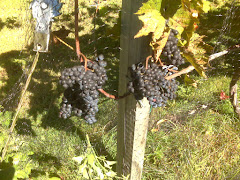
I can still remember the old Paul Masson commercials where Orson Welles would sophisticatedly state in his sonorous voice "We will sell no wine before it's time." I can't help but think of that mantra as I write this post. It's one I've been wanting to write for a long time now. The only problem was, I needed time, time and experience growing the Regent grape and making wine with it. How else could I say anything worthwhile, helpful or even credible about something as biologically complex and sensually sophisticated as winegrapes. Not to mention the making of their luscious byproduct. Alas, I finally believe that I have that experience, and I would like to share it with you. Way back in January 2009, in this post: The Regent Winegrape

 I detailed how I came to plant this obscure winegrape as well as some background information on it. I mentioned that at that time I was hard-pressed to find anything that would help me make an educated decision as to planting it in my vineyard or not. Not much has changed in that regard. Aside from a few bits of information here and there, you just can't find much to go on. After much consideration, I went with my "gut" and ordered the vines. I have been cultivating and making wine with the Regent winegrape now for six years! It's amazing how fast time flies. I just pressed my 5th vintage and it's finishing primary fermentation in glass. Was my "gut" right? I would have to respond with a resounding yes!

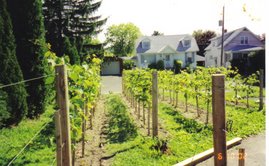
 Let's get this out of the way first, Regent is not a perfect grape. It has some disadvantages. But for me in my cool-climate, USDA hardiness zone 5B, upstate New York vineyard, it has been excellent. It breaks bud later than many hybrids or Vinifera varieties, on average early to mid-May in my climate. Thus, it usually avoids spring frost damage. It is not overly vigorous and is maintains a relatively open canopy with an upright growth habit. That also facilitates VSP training, which I prefer. Regarding winter hardiness; this was one of my biggest concerns when I was deciding whether to plant Regent or not. I have not found much information on the Internet about this subject and I still don't. What I do find says that I should not be able to grow Regent in my climate in most years, ranking it's hardiness with most Vinifera varieties at about 0F to -6F. I believe there just isn't enough experience with the grape in cool to cold climates. That being said, here's what I can now tell you has been my actual experience over the past 6 winters with my 30 Regent vines. Below zero temperatures are an annual occurrence in my vineyard. The question is how low will it go? The potential exists on very rare occasions for winter lows as cold as -20 Fahrenheit. It hasn't happened in the 13 years I have been growing winegrapes. 0 to -10 Fahrenheit is more common. I have however, experienced -13 and -14 Fahrenheit on at least two established and recorded occasions with Regent. Both times Regent survived handily with absolutely no trunk damage. It has however suffered bud damage in both of those years. Those temperatures have reduced my crop by up to 60% in the worst year. I will add though, that in those years of reduced crop, I have had made some of the best wine from my Vineyard with Regent. Regent is a good producer and has consistently attained full maturity for me by the end of September. It has achieved sugar levels of 24 degrees Brix in 3 of the past 5 harvest seasons. The lowest Brix I have seen is 22.5 degrees. As far as acid is concerned, T.A. levels ranging from .4 to .6 are what I have seen. I have not had any PH problems, but you do need to keep an eye on it in very hot years. A few other observations I have noted are that the skin on the grapes is thin and with such nice sugar levels wasps love to bore into the grapes and eat them until they are just empty shells. Traps have helped minimize this for me. Also when the grapes need to hang longer in cooler years, they tend to being to fall off the bunches when very ripe. Not a huge problem, but worth mentioning. It has excellent disease resistance, with only a bit of Black Rot posing a problem in some years for me. All in all it has been very easy to grow in my vineyard.


 The wines I have made with Regent are very dark, but not inky like many hybrids. It has strong cherry notes, also common of hybrids, but a very good tannin structure. The tannins are on the medium side. My best vintages have had notes of dark fruit, earth and even chocolate. They have been really good. Under-ripe, the grape produces a herbaceous and harsher wine with more of a sour cherry component. Over-ripe, the PH can get out of control and make a flabby wine with a black olive kind of flavor. It's not terrible, but I chose to blend it with a Noiret to balance it out just a bit that year. I'm still really learning how to best handle this grape in the winery, but so far I shoot for a Brix of about 23.5-24, T.A. of .5 and hopefully a PH of less than 3.6. I have tried different yeast strains such as Red Star Pasteur Red, Lalvin 71b-1122 (usually used for whites, but can be used to reduce acid in hybrids) as well as Lalvin Bourgovin RC-212. I have settled on the Lalvin Bourgovin so far. I always do a malolactic fermentation even in years of lower acid because it really adds a nice vanilla and caramel hint as well as a velvety feel to the wine. I would rather have those flavor components and adjust the acidity if I need to, so I feel it's a must do. Regent can handle a lot of oak and I always oak it. I have found it best to avoid toasted oak because it increases the black olive component to an unpleasant level, even when the grapes are not over-ripe. I like to macerate 3-5 days and absolutely no more. Err on the side of less. The less ripe, the fewer days on the skins. But still no more than 5 days even when perfectly ripe.

 I still don't think I have enough experience with Regent to have really dialed it in yet, but I'm determined to keep working with it until I find the right methodology. Of course, that will differ from vineyard to vineyard, climate to climate, and with personal taste. I am really pleased with where I'm headed with it though, and I feel the best has yet to come. A neighbor of mine who is an Italian immigrant, has also planted Regent after seeing my vines. He leans toward a more "traditional Italian" technique with natural fermentation, less emphasis on science, and even mixing grape varieties. However, he made a 50/50 blend of Regent which he grew, and Merlot grapes that he purchased from California. The resulting wine won 1st place at a local wine competition held at an Italian community center in 2014. It beat the 100% Merlot wine he also made that year from the same California grapes. I'm not sure what that means to those of us interested in growing and producing quality varietal wines, but I think it's a testament to Regent's potential and quality.

 I can't help but wonder what Orson Welles might say if he were around to taste what I consider to be my best Regent vintage to date, from 2012? I'm not sure, but hopefully it would be something along the lines of; "It's almost time, You're getting there". But than again I've never tried Paul Masson wine. It seems like just a mass produced bulk wine. Was it even any good? I guess it's all a matter of personal opinion and taste.

Wednesday, March 17, 2010

Spring 2010 Winemaker Article

Just in time for spring in the vineyard, I just completed another article for Winemaker Magazine. It's all about spring frost protection. Check it out in the latest issue or at www.winemakermag.com

New posts coming soon!

Tuesday, July 21, 2009

Winemaker Magazine Article

I've been very remiss in updating the blog this summer, that will change soon. In the meantime I'm happy to say that I've written my first full-length article in Winemaker Magazine! Te article is entitled "Ripening Techniques For Cool Climate Vineyards" . You can find it in the August-September 2009 issue of Winemaker Magazine. Checkout the website at: www.winemakermag.com

The vineyard this year has been a real challenge. We are experiencing what seems to be the worst summer weather we've had since I planted in 2001. Non-stop cloudy, cool and rainy weather here in the Northeast US. July has been terrible and I've been fending off downy mildew and rot all summer long. I've been trying to keep the canopy very thin but it's been difficult. I'm still keeping up hope for a hot sunny August and September. I hope your vintage is going well in your vineyard. I'll post some pictures and updates soon.

Thursday, April 16, 2009

New Video: Grapevine Pruning II -Double Guyot

I've finally finished the video on cane pruning. It's only about a year  late. I actually planned on doing a cane pruning video first but the footage  was lost somehow so I just put the spur pruning video out there anyway. So I hope you enjoy the video. It shows me cane-pruning two vines using the French Double Guyot method. As always comments and questions are welcome. Enjoy!

Tuesday, January 20, 2009

The Regent Wine Grape

Four years ago I began searching for a red grape variety to replace the Frontenac vines in my vineyard. I had chosen Frontenac when I originally planted my vineyard along with three other varieties for trial. The reason I had decided on this University of Minnesota variety had to do with a lot of unknown variables. There was and is literally no one other than me who is growing fine wine grapes within a 50 mile radius of my house. Oh there are plenty of people growing grapes and making wine, but by and large they are Italian immigrants who have planted what would "grow with little effort" in the USDA zone 5b climate of New York State's Capital Region. That is to say, vitis labrusca grape varieties like Concord, Niagara and the like. They grow well, make delicious jelly, pies and juice, but terrible wine in my opinion. So when I planned my vineyard with nothing to go on, I had to take into consideration the all-time record low temperature of -28F and the more regularly occurring low of -10F. After a lot of research, Frontenac seemed to be a good choice. It is very hardy, to -30F or better. I also read many claims of very good "Pinot Noir like" wines being produced with it. I planted it figuring that it would guarantee me a crop despite winter lows and hey, if I could produce "Pinot Noir like" wine with it, I was all set.


As a grower, this is how you begin understand what that ambiguous French word "terroir" (pronounced "ter-wah") means. This word has been used to denote the special characteristics that geography has bestowed upon grapes. It can be very loosely translated as "a sense of place" which is embodied in certain qualities, and the sum of the effects that the local environment has had on the grapes which contributes to the quality and distinctiveness of the finished wine. In layman's terms: those Frontenac grapes did not like the terroir of my backyard. The vine was overly vigorous, prone to bunch stem necrosis (rot that killed the stems and prevented many grapes from ripening) and the wine was just plain bad. I made three vintages and it always tasted like funky, bitter grape juice with tongue-burning acidity. It was full of off-flavors and not pleasant at all. I know there are growers out there who are making pleasant wines with this grape even enjoying commercial success with it due to their terroir and wine making techniques, but not me. Thus began my quest for the perfect grape to replace it.


Replacing a variety is actually exciting when you have a bit of experience under your belt. You begin to imagine a new variety ripening perfectly and the wonderful wines you will make with it. As I searched around taking into consideration my climate, site and other factors, I narrowed it down to a few varieties. One of them I stumbled across was a German red variety called Regent. The information out there is scarce but it is described as being bred in 1967 by Professor Gerhardt Alleweldt at the Geilweirlerhof Institute for Grape Breeding in Germany. It is a cross of the vitis vinifera variety Diana (Silvaner x Muller-Thurgau) with the interspecific hybrid Chambourcin. Thus it is still considered an interspecific hybrid. Since it has such a great percentage of vitis vinifera in it's parentage though, in Germany it has been declared vitis vinifera. I read that it makes deeply colored wines with good tannins and red fruit components, as well as being able to handle oak well. The wines have been described as "Southern Rhone" in character. Possibly one of it's best qualities is that it is very resistant to fungal diseases. All of this sounded great so I began to search for Regent vines and Regent wines, to no avail. No one had the vines, and the wine!? Nowhere to be found in the U.S.A. They seem to be available in the UK but not here. I also couldn't find any information on it's hardiness, which was a concern to me.

I finally got in contact with some growers who were familiar with it in some grape growing groups and found a source for the vines as well as "unofficial" claims of hardiness down to -14F. It seems to be gaining some popularity in the Puget Sound area of Washington. It appears there will even be a commercially available Regent this year from a Washington grower. Here in the Northeast I have yet to find anyone growing it amature or pro. I decided to give it a try and planted about 25 vines three years ago. I harvested my first small crop, eneough for a stand alone varietal this year. I'm going to give my assessment of the vine after three years of growing it (which is not a lot of experience) in Upstate New York:

1. Regent has very controlled upright growth with low to moderate vigor. I have my vines grafted on 101-14 for my heavy soils and phylloxera resistance. It is easy to manage so far which is interesting because every other variety I grow is quite vigorous for me.

2. It is very disease resistant, I spray it every other time I spray Cab Franc and Riesling and have had NO problems with disease.

3. It ripens in early October for me, just after Marechal Foch and well before Cabernet Franc.

4. So far I have had no winter damage on it with low temps around -5F. I hill up the graft union and blow as much snow as I can on them but no other protection.

5. I harvested about a week before I would have liked to this year at 21 brix and 6.1 T.A. I would have liked to let the grapes hang to about 23brix but the bees were destroying my crop so I had to get them in.

6. So far the wine seems good, but I'm thinking the extra week would have been beneficial. It has excellent color, an earthy nose with spicy hints. The flavor is a bit too young to judge yet but seems pleasant. I'll keep up posting on it as it develops.

So did I make the right decision? I'll know in a few more years, but that's how you find the perfect grape. There are no shortcuts. I'm pleased so far but only time will tell. I hope this information helps others who may be interested in this grape. Please feel free to ask any other questions you may have about it.

Wednesday, December 24, 2008

Vineyard in Glass

Here are some pictures of my vineyard and surroundings after the recent ice storm that hit the Northeast US. The ice sure put a beautiful twist on things. Enjoy...


Monday, December 15, 2008

Hilling Up The Vines and Winter Protection

Growing vinifera wine grapes in the Northeast United States or any other cold-climate growing region, requires special effort. Vinifera grapes include the classic wine grape varieties such as Cabernet Sauvignon, Pinot Noir, Chardonnay, Merlot and Riesling to name just a few. Many people feel that these grapes make the best wine, including me. They are however, very susceptible to disease and cold temperatures. Although cold tolerance varies from variety to variety, as a general rule if your winter temperatures flirt with anything below zero Fahrenheit, you will need to protect your vines for winter. If your temperatures regularly get below -15 F, you may not want to attempt to grow vinifera grapes and choose French-American hybrids or other Hybrid varieties of wine grapes. They don't make as high quality wines as vinifera(in my opinion), but some of them can and do make excellent wine. In my vineyard the risk for temperatures well below -15 F  exists. Fortunately it doesn't happen with any regularity. As a matter of fact I cringe as I write this because I feel like I'm "due" for some very cold weather since it hasn't happened in a few years now. Since the risk of these low temperatures is there I have to take precautions to protect my vineyard if I want to produce grapes every year. 

The first precaution is the varieties I have chosen to grow. When I planted my vineyard eight years ago, I did a lot of research to try and determine what I could plant. I've detailed that  research in previous posts like this one: 

In my vineyard I have chosen to grow two vinifera varieties; Cabernet Franc and Riesling as well as two hybrid varieties; Marechal Foch and Regent. If I do experience very cold winter lows and it kills the buds on my vinifera, these two hybrids will likely survive and I won't go a vintage without making some "estate wine".

The second precaution I take is protecting my my vines during winter. The vinifera varieties I've chosen to grow, Cabernet Franc and Riesling are the most hardy vinifera that I am aware of. They are both hardy to -5 F or a little colder and they will not be killed until the temperature drops below -16 F. Being "hardy" means that the temperature can drop to -5 F without the grower having to protect the vines in any way. Temperatures lower than that will begin to kill buds, wood and eventually the vine itself as it gets progressively colder. As the previous post I referred to details, I used to completely bury my vinifera vines each year. Burying vines will ensure their survival even in very cold climates where temperatures drop below what the vine can normally tolerate. It is also a lot of work! I would prune each vine to 4 or 5 canes in late November after thanksgiving. Then I'd bundle each vine using wire ties. I have my vines planted at about 45 degree angles using a "j" type training so that after bundling, I could carefully lay them down. I'd then dig a little trench so that the whole vine could lay flat on the ground. Then I would pin the vine to the ground using pins made from trellis wire. Next I would take dirt and mound up the graft union with about 4-6" of soil, burying the lower portion of the trunk and the graft union. After burying I would cover the whole vine with straw, canes and all. Like I said, it was a lot of work and I had to do that with more than 50 vines! Some vineyards in Minnesota do this for vineyards of thousands of vines, wow! It works though and it will protect your vines from winter injury if you want to grow vinifera in a cold climate.

I have since changed my methods to a simpler, albeit riskier method of winter protection called "hilling up". This is commonly used in places like the Finger Lakes of New York and some Mid-Atlantic state vineyards. It's easier because all you are doing is mounding soil up around the graft union or scion of the vine. By protecting this part of the vine, the grafted vinifera wood, you ensure that a new shoot will grow even if the rest of the vine is killed by cold temperatures. This method works if there are many years between extremely cold low temps like in my vineyard. The nice thing here is that even by hand it only takes a few minutes to hill up a single vine. I can hill up all my vines in an hour or two.


The third precaution I take is growing multiple trunks. Again, a technique used in the Finger Lakes and other areas. By allowing a new shoot to grow from the base of the vine each year you are basically upping the chances that one of these trunks will survive if very cold temps do occur. I have also taken it a step further. The shoot that has grown during the previous growing season is still very thin and flexible in the fall. It is easy to bend it down to the ground, lay it flat and pin it in place. A shovel full of dirt or two and it's covered. This provides a little form of insurance so that if perhaps, the rest of the exposed parts of the vine are killed, I have some one year old buds that will produce at least a small crop. 

The fourth precaution I take is kind of site-specific. Since I have a small backyard vineyard and we generally receive a good amount of winter snow, I use it as insulation. By blowing as much of it as possible onto my vines, it acts as extra protection for the trunk and graft union. It rarely gets high enough to cover canes and cordons though, and you can't always count on it to be there when cold temps arrive, but it helps when it does come.

So there you have it, that's how we "crazy" cold-climate growers fight old man winter. I'm sure anyone in California or other moderate growing regions who reads this is probably very appreciative that they don't have to deal with this stuff. It does take a lot of effort but I think it makes you appreciate the finished product even more. I think of it like the rich kid who has everything "handed to him from daddy" versus the poor kid who has to fight and claw his way to success. Which one appreciates what he has more? I know that when I pour a glass of Villa Ruzzo Cab Franc or Riesling, I can taste the work, effort and love that went into making it along with delicious fruit, earth, pears, petrol, blue stone and vanilla oak. But who knows,  maybe it's just in my mind.